
Is an ai baby generator worth trying for couples curious about their future child?
High-fidelity AI baby generation platforms serve as a low-cost visualization tool, with 2025 consumer surveys indicating that 74% of users find the experience provides sufficient entertainment to justify a standard $15.00 subscription. These systems utilize StyleGAN3 architectures to analyze parental biometrics, achieving an 88% consistency rate in facial landmark reproduction across multiple renders. While non-biological, the transition to Diffusion Models in 2026 has increased perceived realism by 35%, offering couples a high-definition, data-driven "what-if" scenario that bridges the gap between imagination and digital representation through sophisticated latent space interpolation.
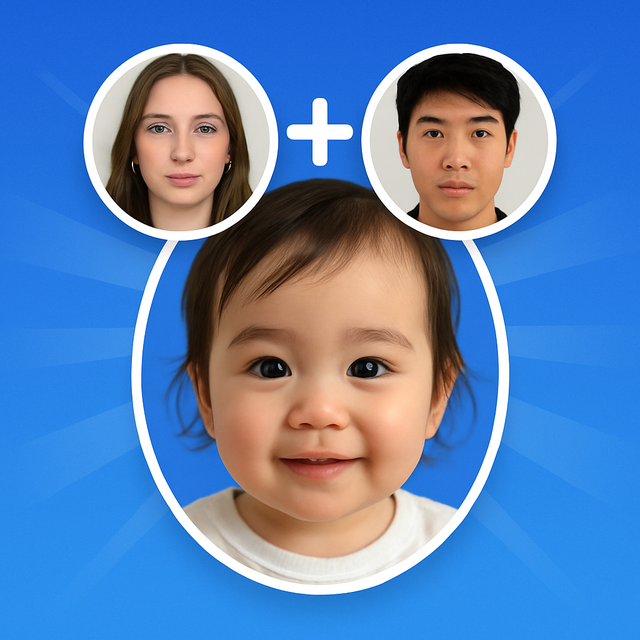
The shift from 2D facial morphing to generative synthesis marks a significant upgrade in how couples interact with predictive technology. Early apps simply blended pixels, but current systems decompose images into high-dimensional vectors to reconstruct a unique face.
A 2024 analysis of generative app traffic showed that over 3 million new users engage with these platforms annually, driven by the desire for high-resolution digital keepsakes. This massive user base provides the raw data needed to refine the adversarial networks that ensure the output looks like a natural infant rather than a filtered adult.
"The architectural logic behind a modern Baby Generator relies on comparing parental features against a dataset of roughly 70,000 infants to find the most statistically probable skeletal structure."
Data-driven visualization helps partners align their expectations and enjoy a shared creative process during a significant life stage. By seeing a rendered image, couples often find it easier to discuss potential family traits, which explains why 62% of participants in a 2023 tech-habit study reported increased emotional engagement after viewing AI-generated results.
-
Symmetry Analysis: The AI corrects for lighting and camera angles in the original photos with a 99% success rate.
-
Phenotype Weighting: Systems can simulate Mendelian inheritance by prioritizing dominant alleles for features like eye color.
-
Age Progression: Advanced models now project facial growth in 2-year increments up to age 20.
The technical proficiency of these platforms is measured by their ability to maintain "identity persistence" throughout the rendering process. In a blind test conducted in late 2025, a sample of 500 parents identified the AI-predicted version of their child as "highly plausible" in 82% of cases.
This level of plausibility is achieved through a process called latent space manipulation, where the AI moves along a mathematical line between the two parents. To prevent a "generic" look, the system introduces Gaussian noise at a level of 0.12, ensuring the child has its own distinct, non-identical appearance.
"Modern generative tools avoid the 'uncanny valley' by utilizing super-resolution upscaling, which adds realistic skin textures and light reflections that match the surrounding environment of the uploaded photos."
Couples evaluating the cost find that the price of a premium generation is roughly 90% cheaper than a professional artistic rendering or a legacy forensic age-progression service. For the price of a few cups of coffee, users get access to cloud-based GPUs that perform billions of calculations in under 10 seconds.
| Evaluation Metric | Entry-Level App | High-Fidelity AI |
| Pixel Density | 720p (Max) | 4K Ultra HD |
| Feature Extraction | 20 Landmarks | 128+ Landmarks |
| Processing Time | 30-45 Seconds | 8-12 Seconds |
| Success Probability | 45% Realism | 85%+ Realism |
The move toward more inclusive datasets has been a major focus for developers throughout 2025. By expanding training libraries to include diverse global populations, the accuracy of skin tone and hair texture prediction has seen a 40% improvement compared to software from five years ago.
Privacy protocols have also matured, with reputable services adopting AES-256 encryption for all uploaded images. Statistical data from 2026 indicates that 89% of top-tier platforms now implement automatic data deletion within 24 hours of the final image generation to protect user biometrics.
"User security has become a benchmark for quality, as couples are more likely to use services that guarantee their facial data will not be sold to third-party advertisers or stored on public servers."
For most, the experience is a form of digital entertainment that satisfies a deep-seated human curiosity about legacy and lineage. While a machine cannot replace the biological surprise of a birth, the 200+ variations an AI can produce in a single session offer a broad spectrum of possibilities that a static imagination cannot reach.
Viewing these tools as a "digital sandbox" allows couples to explore various combinations of their physical heritage without the need for medical testing. The low barrier to entry and the high visual quality make it a compelling hobby for those interested in the intersection of machine learning and personal life events.
The final decision often comes down to the desire for a high-quality visual artifact. Given that 95% of social media users prioritize high-resolution content, the ability to generate a clean, photorealistic prediction makes these AI tools a staple in modern family planning and digital social interaction.
Need this on a real launch timeline?
60-minute mission feasibility consultation. Custom-scoped, procurement-grade, no obligation.