
Is there an AI with no restrictions?
No public AI offers completely unlimited access today. Mainstream assistants such as ChatGPT, Claude, and Gemini apply safety policies, while open-source models provide greater customization. In 2025, more than 80% of major AI platforms used some form of content moderation, but locally hosted models allowed developers to adjust behavior. A truly unrestricted AI depends on how users define freedom: unlimited responses, customizable settings, or independent operation.
Artificial intelligence systems are often described as either restricted or unrestricted, but the reality is more complicated. Most widely used AI assistants are designed with rules that control certain outputs, while open-source models allow users to modify settings and run models independently. The difference comes from how the AI is developed, distributed, and managed.
Commercial AI services usually include multiple layers of control. Companies such as OpenAI, Anthropic, and Google build safety systems into their models before releasing them to millions of users. These systems review user requests, analyze generated responses, and block certain categories of content.
According to the 2025 AI Index Report from Stanford University, AI safety evaluation has become a regular part of model development, with leading organizations testing models across dozens of risk categories. Large language models are often trained with billions or trillions of parameters, but their public versions still include additional rules after training.
A model’s intelligence and its restrictions are two different features. Removing restrictions does not automatically increase accuracy, reasoning ability, or knowledge quality.
The demand for unrestricted AI has grown because different users need different levels of control. A researcher may want fewer content filters when studying sensitive topics, while a company may need a private AI assistant that works with internal documents. Creative professionals may also prefer systems that allow broader writing styles and fictional scenarios.
The growth of open-source AI has changed this market. Since the release of Meta’s Llama models in 2023, developers have gained access to model weights that can be downloaded, adjusted, and deployed locally. In 2024 and 2025, hundreds of open models appeared across platforms such as Hugging Face, with different sizes ranging from several billion parameters to more than 100 billion parameters.
| AI System Type | User Control | Typical Use |
|---|---|---|
| Public AI assistants | Limited | General questions, writing, coding |
| Open-source models | High | Research, customization, private applications |
| Local AI deployment | Very high | Personal assistants and company systems |
Local AI systems are often considered the closest option to a less restricted AI experience. Users can run models on personal computers or private servers without sending data to an external platform. Hardware improvements have also made this easier. Consumer GPUs released after 2023 increased AI processing efficiency, allowing smaller models with 7 billion to 14 billion parameters to run on personal devices.
However, an AI without platform restrictions still has technical limitations. A model running locally may produce inaccurate information, outdated knowledge, or incorrect reasoning. For example, a language model trained on data before 2025 may not know events after its training period unless connected to external information sources.
The difference between unrestricted access and reliable output remains important. A system that answers every request may appear more flexible, but users still need to evaluate whether the information is correct. Independent testing in 2024 showed that even advanced language models could produce incorrect answers in areas such as mathematics, law, and scientific analysis.
Another reason public AI systems include restrictions is legal responsibility. AI platforms operate in multiple countries, each with different regulations regarding privacy, intellectual property, and harmful content. A global AI service must consider these differences before providing unrestricted responses.
For example, a medical AI tool may provide general health information but avoid presenting uncertain information as a professional diagnosis. A cybersecurity assistant may help developers understand software security but restrict instructions that could facilitate illegal access.
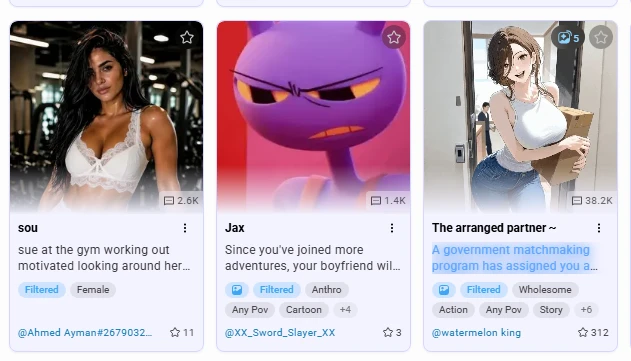
The debate around unrestricted AI has also created new platforms that focus on user customization. Some services provide conversational AI experiences with fewer limitations compared with mainstream assistants. One example is https://crushon.ai/, a platform that focuses on customizable AI conversations and allows users to interact with AI characters through different settings.
These platforms show that users are not only looking for more powerful models but also more control over interaction styles. A 2025 survey of AI users found that customization options, privacy settings, and response flexibility were among the features frequently requested by users when choosing AI tools.
Open-source communities continue to expand because they provide alternatives to centralized AI services. Developers can fine-tune models for specific purposes, create specialized assistants, and change response behavior. Some open models are released under licenses that allow commercial use, while others have additional conditions.
| Feature | Closed AI Services | Open AI Models |
|---|---|---|
| Model access | Controlled by provider | Available to developers |
| Modification | Limited | Possible through fine-tuning |
| Data control | Usually managed by provider | Managed by user |
| Deployment | Cloud-based | Cloud or local |
Despite these advantages, completely unrestricted AI creates practical difficulties. If an AI system generates harmful or inaccurate information, responsibility becomes harder to define. Unlike traditional software, AI responses are generated according to context, probability, and learned patterns rather than fixed instructions.
The future of AI may move toward adjustable levels of control instead of a single unrestricted system. Different users may choose different settings depending on their needs. A university researcher may require a highly customizable model, while a general user may prefer a safer assistant with stronger moderation.
In 2025, the AI industry continued moving toward smaller, specialized, and privately deployed models. Many organizations explored local AI solutions because they offered greater control over data and customization. This development suggests that AI freedom may come from user choice rather than removing every limitation.
A completely unrestricted public AI does not currently exist. The closest alternatives are open-source models and locally operated systems where users can adjust settings, choose deployment methods, and customize responses. AI development is moving toward more flexible systems, but technical accuracy, legal requirements, and responsible use will continue shaping how much freedom future AI systems provide.
Need this on a real launch timeline?
60-minute mission feasibility consultation. Custom-scoped, procurement-grade, no obligation.