
How Can You Source High-Quality Dropshipping Toys Kids Babies from Trusted Suppliers?
Mission Status: GO FOR INTEGRATION
In the field of toys and infants, which has zero tolerance for safety and quality, the first step in finding a reliable supplier is a thorough qualification review. Truly high-quality suppliers will proactively disclose their comprehensive compliance certifications, such as mandatory certifications for children's products like CPC (in the United States), CE (in the European Union, including EN7-1,2,3), UKCA (in the United Kingdom), as well as safety standards for materials like ROHS (Restriction of Hazardous Substances) and REACH (Registration of Chemicals). Data shows that for suppliers with full target market certifications, the risk probability of their products being detained or taken off the shelves by customs is less than 1%, while for those without clear certifications, the risk probability exceeds 30%. Looking back at the large-scale recall of a batch of children's metal toys with lead content exceeding the standard by 300% by the US CPSC in 2020, the involved retailers suffered losses of over ten million US dollars. This highlights the absolute necessity of verifying the authenticity of each certification report. Sellers should require suppliers to provide traceable test report numbers and can verify them on the official website of the certification body by themselves. This work can reduce potential legal risks by 90%.
Beyond paper qualifications, a thorough assessment of the manufacturing and quality control systems of suppliers is at the core. A responsible supplier should be able to provide detailed product specification parameters, such as the raw material grade of plastic toys (whether it meets food contact grade ABS), the weight and antibacterial treatment of the filling in plush toys, and the heavy metal content detection values of the coatings (lead content should be less than 90ppm and cadmium less than 75ppm). You can ask the supplier to provide data on the quality control process of their production line, for instance, whether they conduct AQL (Acceptable Quality Level) spot checks. Generally, AQL 1.5 (Major Defects) is a relatively high industry standard, meaning that there are no more than 1.5 seriously defective products per 100 items. Surveys show that for factories that have established the ISO 9001 quality management system, the average defect rate of their products leaving the factory is below 0.8%, while for factories that have not established the system, the defect rate may be as high as 5%. By conducting video factory audits or reviewing their production process documents, you can assess the stability of their manufacturing processes, which is crucial for ensuring product consistency and preventing customer complaint rates from exceeding 15%.
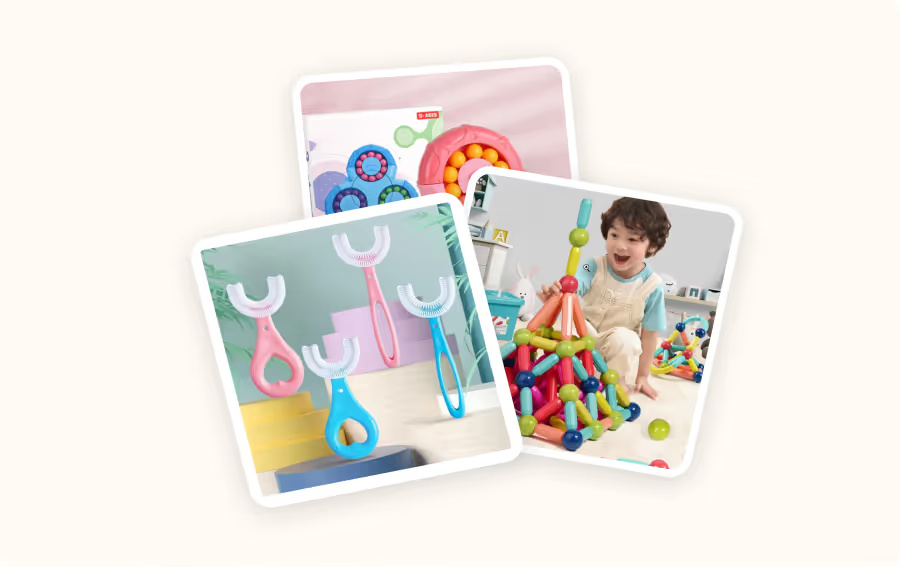 Physical sample testing is an indispensable "pressure test" step. This is far more than just "taking a glance", but rather conducting a series of quantifiable evaluations. You can measure whether the actual size and weight of the product match the description (the error should be less than 3%), test the assembly strength of the components (such as tensile testing, to ensure that the small parts do not fall off under a force of 90N to prevent swallowing risks), and check whether the edges are smooth (the radius should be greater than 1mm). For electronic toys, it is necessary to test whether the battery life reaches the claimed 8 hours and whether the sound and light intensity complies with the ASTM F963 standard (the volume does not exceed 85 decibels). A real case is that a seller, after receiving a sample of baby teething rings, conducted a temperature cycle test ranging from -20°C to 60°C to simulate an extreme transportation environment. As a result, it was found that the product developed cracks, thus avoiding a possible large-scale return. Such rigorous sample testing, although requiring a budget of approximately 200 to 500 US dollars, can eliminate potential quality crises that could cause losses of over 30% in the future.
Ultimately, a reliable supplier is reflected in the transparency and responsiveness of its supply chain. When inquiring about the order fulfillment cycle (the average time from order receipt to shipment), high-quality suppliers can keep this cycle stable within 48 to 72 hours, with the fluctuation range (standard deviation) controlled within 12 hours. Suppliers with a healthy inventory turnover rate can ensure that 90% of their SKUs are in stock and the out-of-stock rate is less than 5% by understanding their inventory depth and replenishment frequency. In the Dropshipping Toys Kids Babies business, the logistics partnership model is crucial: ask whether the packaging supports brand customization, whether environmentally friendly materials are used, and whether the logistics partner can provide full tracking services and keep the shipping damage rate below 1%. A partner worth long-term cooperation will provide clear data dashboards, allowing you to view inventory levels, shipping status and problem order rates in real time (usually below 2%). By incorporating the above quantitative indicators into the supplier scoreboard, you can systematically screen out top partners that can reduce your product safety complaint rate to below 0.5% and achieve an annual cooperation stability of up to 99%, thereby establishing the most solid competitive barrier for your store.
Physical sample testing is an indispensable "pressure test" step. This is far more than just "taking a glance", but rather conducting a series of quantifiable evaluations. You can measure whether the actual size and weight of the product match the description (the error should be less than 3%), test the assembly strength of the components (such as tensile testing, to ensure that the small parts do not fall off under a force of 90N to prevent swallowing risks), and check whether the edges are smooth (the radius should be greater than 1mm). For electronic toys, it is necessary to test whether the battery life reaches the claimed 8 hours and whether the sound and light intensity complies with the ASTM F963 standard (the volume does not exceed 85 decibels). A real case is that a seller, after receiving a sample of baby teething rings, conducted a temperature cycle test ranging from -20°C to 60°C to simulate an extreme transportation environment. As a result, it was found that the product developed cracks, thus avoiding a possible large-scale return. Such rigorous sample testing, although requiring a budget of approximately 200 to 500 US dollars, can eliminate potential quality crises that could cause losses of over 30% in the future.
Ultimately, a reliable supplier is reflected in the transparency and responsiveness of its supply chain. When inquiring about the order fulfillment cycle (the average time from order receipt to shipment), high-quality suppliers can keep this cycle stable within 48 to 72 hours, with the fluctuation range (standard deviation) controlled within 12 hours. Suppliers with a healthy inventory turnover rate can ensure that 90% of their SKUs are in stock and the out-of-stock rate is less than 5% by understanding their inventory depth and replenishment frequency. In the Dropshipping Toys Kids Babies business, the logistics partnership model is crucial: ask whether the packaging supports brand customization, whether environmentally friendly materials are used, and whether the logistics partner can provide full tracking services and keep the shipping damage rate below 1%. A partner worth long-term cooperation will provide clear data dashboards, allowing you to view inventory levels, shipping status and problem order rates in real time (usually below 2%). By incorporating the above quantitative indicators into the supplier scoreboard, you can systematically screen out top partners that can reduce your product safety complaint rate to below 0.5% and achieve an annual cooperation stability of up to 99%, thereby establishing the most solid competitive barrier for your store.
Physical sample testing is an indispensable "pressure test" step. This is far more than just "taking a glance", but rather conducting a series of quantifiable evaluations. You can measure whether the actual size and weight of the product match the description (the error should be less than 3%), test the assembly strength of the components (such as tensile testing, to ensure that the small parts do not fall off under a force of 90N to prevent swallowing risks), and check whether the edges are smooth (the radius should be greater than 1mm). For electronic toys, it is necessary to test whether the battery life reaches the claimed 8 hours and whether the sound and light intensity complies with the ASTM F963 standard (the volume does not exceed 85 decibels). A real case is that a seller, after receiving a sample of baby teething rings, conducted a temperature cycle test ranging from -20°C to 60°C to simulate an extreme transportation environment. As a result, it was found that the product developed cracks, thus avoiding a possible large-scale return. Such rigorous sample testing, although requiring a budget of approximately 200 to 500 US dollars, can eliminate potential quality crises that could cause losses of over 30% in the future.
Ultimately, a reliable supplier is reflected in the transparency and responsiveness of its supply chain. When inquiring about the order fulfillment cycle (the average time from order receipt to shipment), high-quality suppliers can keep this cycle stable within 48 to 72 hours, with the fluctuation range (standard deviation) controlled within 12 hours. Suppliers with a healthy inventory turnover rate can ensure that 90% of their SKUs are in stock and the out-of-stock rate is less than 5% by understanding their inventory depth and replenishment frequency. In the Dropshipping Toys Kids Babies business, the logistics partnership model is crucial: ask whether the packaging supports brand customization, whether environmentally friendly materials are used, and whether the logistics partner can provide full tracking services and keep the shipping damage rate below 1%. A partner worth long-term cooperation will provide clear data dashboards, allowing you to view inventory levels, shipping status and problem order rates in real time (usually below 2%). By incorporating the above quantitative indicators into the supplier scoreboard, you can systematically screen out top partners that can reduce your product safety complaint rate to below 0.5% and achieve an annual cooperation stability of up to 99%, thereby establishing the most solid competitive barrier for your store.
Need this on a real launch timeline?
60-minute mission feasibility consultation. Custom-scoped, procurement-grade, no obligation.